Black mould removal
Black mould that keeps coming back, dealt with at the root
Dense black growth on ceilings, window reveals and bathroom sealant rarely goes away with spray and a fresh coat of paint. We remove it properly, find out what is feeding it and give you a written plan to keep it away.
- Affected sealant and coatings taken out
- Non-bleach antimicrobial treatment
- Cause and fixes set out in writing
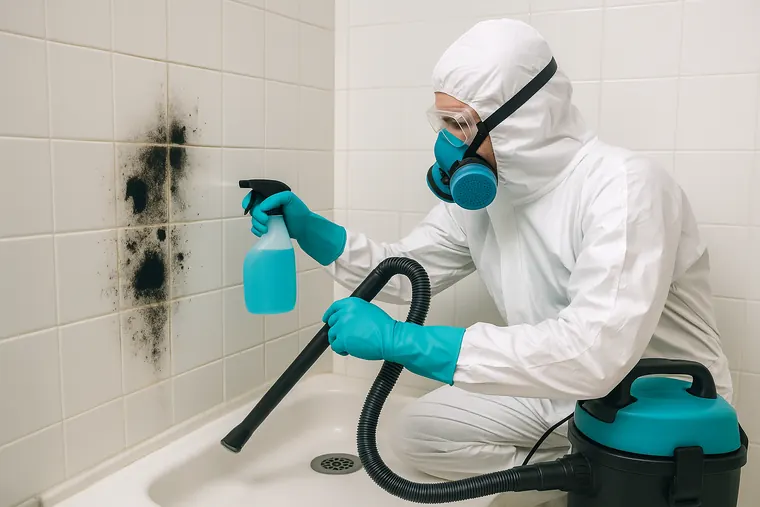
When it is more than a few spots
Signs you need removal, not a clean
A light grey bloom on a window seal after a cold night is common and easy to manage. Heavy black mould is different. It has had time to spread into porous material, and the damp that grew it is still present.
- It returns within weeksThe wall looked fine after cleaning, then the spotting came back in the same pattern.
- It covers a large areaWhole ceiling corners, the length of a wall or the back of a wardrobe.
- It is inside the materialSealant has turned black right through, or paint is blistering and flaking.
- There is a musty smellEven when the growth itself is hard to see.
Health
Why it should not be left
UK government guidance on damp and mould in rented homes says it mainly affects the airways and lungs, and can also affect the eyes and skin. It can make allergic conditions worse. Some people face a higher risk: children, older people, and anyone with an existing health condition or a weakened immune system.
For a landlord or housing provider, that is why a report of black mould needs a prompt response. For a homeowner, it is a good reason not to put the job off until spring.
We are a remediation company, not a medical service. If you are worried about someone's health, speak to a GP or pharmacist.
Common fixes that fail
Why bleach and paint do not work for long
Most of the black mould we are called to has already been treated at least once. Here is why those first attempts tend not to last.
Bleach
Bleach can lighten the stain, so the wall looks clean. It does nothing about the moisture, and growth inside plaster or sealant is left behind. Government guidance recommends mould products over bleach for health and safety reasons.
Paint over the top
Ordinary emulsion covers the marks for a few weeks. On a damp, cold wall, mould grows back through or under the new coat, and the next layer has even less to grip.
Spray and wipe
Shop sprays deal with what is on the surface. Wiping heavy growth can also spread spores. Without containment and HEPA vacuuming, some of the problem simply moves to another room.
Treated it already and it came back? Book a survey and we will find out why.
Request a surveyOur approach
How we treat heavy black mould
The work follows our standard eight-stage method, with extra attention on the points below where growth is dense or recurring.
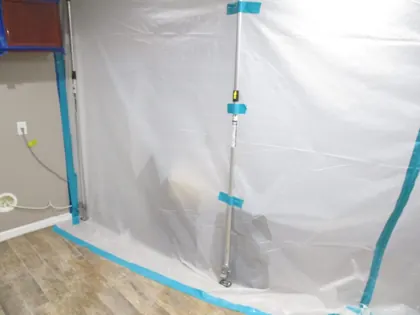
Contain before we touch it
The area is sheeted off and loose spores are captured with HEPA vacuuming before any scraping starts, so the rest of the home is protected.
Remove what is contaminated
Blackened sealant, blown paint and damaged coatings are cut out or scraped back. We do not leave affected material under new paint.
Dry, treat and seal
Surfaces are dried with dehumidification, treated with a non-bleach antimicrobial and finished with a three-coat, mould-resistant system.
Stop the next outbreak
The report explains what fed the growth and what needs to change, such as extraction, heating, insulation or a repair, with advice for the person living there.
Results
Before and after, from real jobs
Photographs from Wblam jobs in London homes, flats and lofts. The same kind of images goes into the report you receive.
Watch the process
See a treatment from start to finish
Containment, HEPA vacuuming, removal, antimicrobial treatment and finishing, filmed on a real job. It is the same sequence your tenant or occupant will see on the day.
Request a surveyPlays from YouTube once you press play.
Black mould questions
Common questions about black mould
Is black mould dangerous?
Government guidance says damp and mould mainly affect the airways and lungs, and can also affect the eyes and skin. Some people are more at risk, including children, older people and anyone with a health condition or weakened immune system. We cannot give medical advice. If someone in the home is unwell, speak to a GP or pharmacist.
Why does the mould come back in the same place?
Because the conditions that grew it are still there. That might be a cold corner where condensation settles, a bathroom without effective extraction, or a slow leak. Cleaning removes what is visible but not the moisture. Our survey finds the cause so the treatment lasts.
Should I clean it myself before you arrive?
Please do not scrub or dry brush heavy growth, as that can spread spores into the air and other rooms. Leave it as it is. It also helps us see and photograph the full extent, which matters for the report and the quote.
Can you treat black mould in a bathroom with sealant?
Yes. Mould in silicone usually sits inside the sealant, not just on top, so cleaning will not shift it. We cut out the affected sealant, treat the area, allow it to dry and reseal. We also check whether the extractor fan is clearing moisture effectively.
Do you guarantee the work?
Yes. Treated areas carry a written guarantee once the recommended fixes, such as ventilation or leak repairs, have been completed. The terms are included in the report you receive.
You may also need
Request a survey
Tell us about the property
Give us the postcode and the best way to reach you. We will call back to agree a time and confirm who needs to be on site.
- Call07488 848 594
- WhatsAppSend photos on WhatsApp
- Emailcontact@wblam.co.uk