For housing associations, ALMOs and council housing teams
Damp and mould capacity built around Awaab's Law deadlines
Since 27 October 2025 the clock starts when you become aware of a hazard. We give repairs and asset teams extra survey and treatment capacity, with dated evidence captured at every step so your case file stands up.
- Surveys planned around your statutory deadlines
- Findings written to support the tenant summary
- Photographs, readings and records on every visit
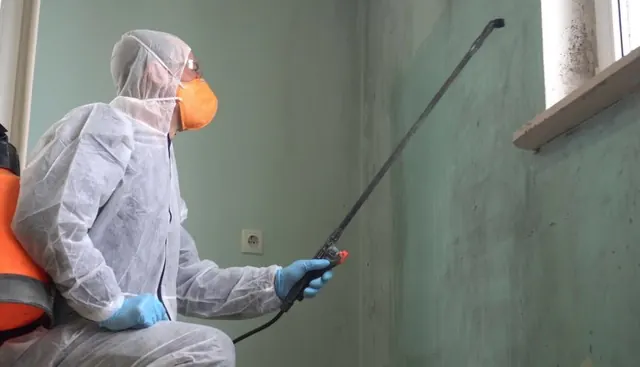
The pressure on repairs teams
When the clock is running, capacity is the problem
Most repairs and asset managers already know what good damp and mould practice looks like. The difficulty is doing it for every case, inside fixed deadlines, while winter reports arrive faster than surveyors can get to them.
We work as an extra pair of hands for that peak. You pass us the case and the date it was reported. We plan the survey, the treatment and the paperwork backwards from your deadline, and we flag early if anything puts it at risk.
Who we support
- Housing associationsGeneral needs, supported and older persons' housing.
- ALMOs and council teamsRepairs desks, disrepair teams and voids managers.
- Asset and compliance leadsPeople who need consistent records across the stock.
Evidence at each stage
What we give you at each point in the case
Awaab's Law sets four timescales: emergency hazards investigated and made safe within 24 hours, significant hazards investigated within 10 working days of becoming aware, a written summary to the tenant within 3 working days of the investigation concluding, and safety work completed within 5 working days of the investigation. Here is where our work sits against them.
Investigation
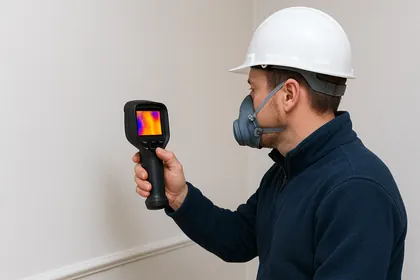
A dated survey with moisture readings, ventilation checks, photographs and the likely cause. The visit date and time are on the record, so you can show when the investigation took place.
Tenant summary
Findings set out in plain language, with the proposed work and our recommendations. Your officer has what they need to write the summary inside the 3 working days.
Safety work
The eight-stage treatment, booked to fit the 5 working day window wherever we can, with before and after photographs and a record of the work completed.
Cases already in the queue? Send the addresses and report dates and we will tell you what we can take on.
Request a surveyCompliance
Awaab's Law has raised the bar for every landlord
The law was named after Awaab Ishak, who died in 2020 after prolonged exposure to mould in his family's social housing flat. It turns reasonable response times into fixed legal deadlines.
Awaab's Law timescales
Social housing, in force since 27 Oct 2025- 24 hours Emergency hazardsInvestigate and carry out safety work
- 10 working days Significant hazardsInvestigate after becoming aware
- 3 working days Written summarySent to the tenant after the investigation
- 5 working days Safety workCompleted after the investigation concludes
We survey, treat and write up each stage, so the evidence for every deadline sits in one file.
Social landlords
In force now
Since 27 October 2025, emergency hazards and significant damp and mould must be dealt with inside set timescales. Further hazards, including excess cold, falls and fire, are added from 30 November 2026, with the remaining hazards to follow in a third phase.
Private landlords
Coming, date not yet set
The Renters' Rights Act 2025 allows the same duties to be extended to private renting, with guidance pointing to 2027 at the earliest. Duties under the Housing Health and Safety Rating System and the Homes (Fitness for Human Habitation) Act 2018 already apply.
What protects you
Speed, and proof of it
A dated survey, photographs, moisture readings and a record of the work done are what you will be asked for if a complaint reaches an ombudsman, a council or a court.
For the case file
Records an ombudsman or auditor can follow
If a complaint escalates, the question is rarely whether mould was present. It is what you knew, when, and what you did next. Our job records are written with that in mind.
- Date and time of every visit and access attempt
- Moisture readings taken in each affected room
- Photographs before treatment, dated
- The likely cause, stated plainly
- A record of the works carried out
- Photographs after treatment, dated
- Recommendations for the landlord and the resident
- Guarantee terms for the treated areas
If safety work cannot be completed in time, the law requires suitable alternative accommodation to be offered. Our early warning on timing gives your team the chance to arrange it. Read more in our Awaab's Law guide.
Our method
Eight stages, every time
The same method on a studio flat or a commercial unit, so results are consistent and reports are comparable across your whole portfolio.
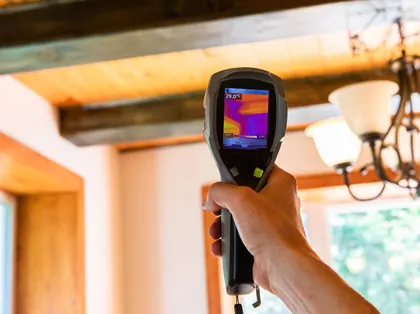
Inspection and moisture assessment
We find where the moisture comes from, how far the growth has spread and what has to change.
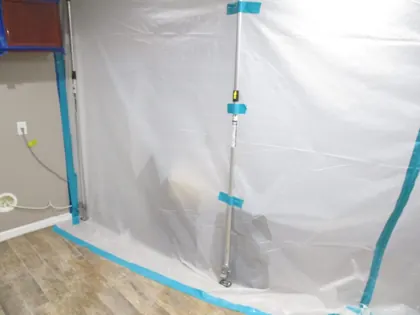
Area containment
The work area is sealed off so spores are not carried into rooms that are clean.
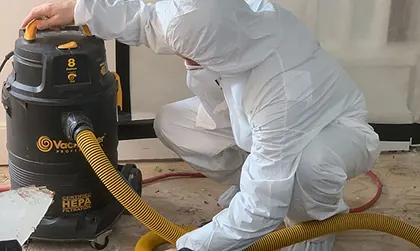
HEPA vacuuming
Loose spores and debris are captured with HEPA-filtered equipment before any surface work starts.
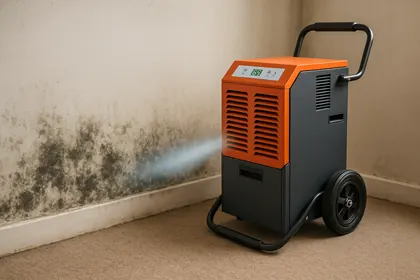
Dehumidification
Damp surfaces are dried out so the treatment can take hold properly.
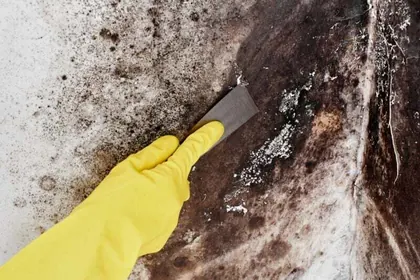
Physical mould removal
Affected sealant, coatings and damaged material are taken out, not painted over.
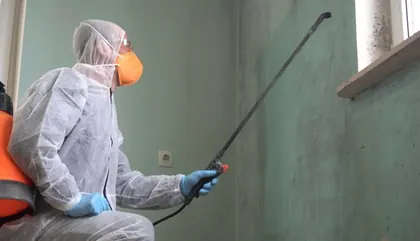
Antimicrobial treatment
A non-bleach antimicrobial is applied to treated surfaces and the area around them.
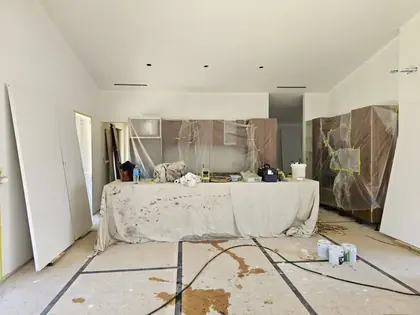
Three-coat paint system
Treated surfaces are sealed and finished with a three-coat, mould-resistant system.
Final check and documentation
We review the finished work and issue the written report with photographs and readings.
Need it done before a deadline? Tell us when the report came in and we will plan around it.
Request a surveyHousing provider questions
What housing teams ask us
Can you guarantee attendance within the Awaab's Law timescales?
We do not promise a fixed response time, because no honest contractor can for every job. What we do is plan each instruction around the deadline you give us. Same-day and next-day appointments are often available, and we tell you at once if a slot cannot meet your date, so you can make other arrangements in time.
Do you write the written summary for the tenant?
The summary is your duty as the landlord, and it must reach the tenant within 3 working days of the investigation concluding. Our survey report gives you the material it needs: what was found, the likely cause, the readings and photographs, and the work proposed. Your officer can draw on it directly instead of starting from blank notes.
Can you contact residents to arrange access?
Yes. We contact the resident to agree a visit, keep your officer copied in and record every attempt. If access is refused or not possible, the dates and details of each attempt go into the job record, which matters when you need to show reasonable steps were taken.
Do you only cover damp and mould?
Yes. Damp and mould is our specialism: surveys, remediation, void treatment, compliance reports and planned maintenance visits. Where the cause is a leak, failed extraction or a building defect, our report identifies it so the right trade can be instructed.
Which areas do you cover?
We work across every London borough, with most of our work in East London. We also cover nearby towns in Essex, Hertfordshire and Kent, which suits providers whose stock crosses the London boundary. Tell us the postcodes involved and we will confirm how we would schedule visits across them.
Can we set up a framework or contract arrangement?
We offer maintenance contracts with planned visits and priority booking, and we can agree contract rates for regular volumes. Each job still receives a written quote before work starts. Talk to us about the volume and type of stock you manage and we will set out how we would resource it.
Useful next
Request a survey
Tell us about the property
Give us the postcode and the best way to reach you. We will call back to agree a time and confirm who needs to be on site.
- Call07488 848 594
- WhatsAppSend photos on WhatsApp
- Emailcontact@wblam.co.uk