A tenant sends a photograph of a dark stain on a bedroom wall. It might be condensation. It might be rain getting through the brickwork, a pipe leaking inside the wall or, less often, moisture rising from the ground. Each of these needs a different repair from a different trade, and each can leave mould behind.
If you instruct the wrong fix, you pay for it and the problem comes back. This guide is about narrowing the cause down before you spend, and knowing when the signs are not enough on their own.
The four usual suspects
Condensation
Condensation forms when warm, moist air inside the home meets a cold surface and drops its water. Cooking, showering, drying clothes indoors and simply breathing all add moisture. If it cannot escape, it settles on the coldest parts of the room.
Typical signs:
- black spotted mould in corners where an external wall meets the ceiling or another wall;
- mould behind wardrobes, beds or sofas pushed against outside walls;
- water running down windows in the morning, with mould on reveals and sealant;
- problems that get worse in colder months and ease in summer;
- several rooms affected, often bathrooms, kitchens and bedrooms first.
Condensation is a very common cause of mould in London flats, but it is rarely just about how a home is used. Broken or missing extractor fans, sealed trickle vents, cold bridges around lintels and poor insulation all make it worse, and those are building issues.
Penetrating damp
Penetrating damp is water coming in from outside through a defect in the building. Common routes are blocked or leaking gutters and downpipes, cracked render, failed pointing, defective flashing around chimneys and roofs, and poorly sealed window frames.
Typical signs:
- a patch on an external wall or ceiling, often in one defined area rather than spread around the room;
- staining that grows or darkens after heavy or driven rain;
- damp plaster that may feel cold and look blotchy, sometimes with bubbling paint;
- a visible defect on the outside of the wall in the same spot.
It can happen at any height and on any floor, including top-floor flats under a failing roof.
Rising damp
Rising damp is ground moisture drawn up through masonry where there is no damp-proof course, or where the existing one has failed or been bridged. It only affects walls at or near ground level.
Typical signs:
- a tide mark on ground-floor walls, usually no higher than about a metre;
- white, powdery salt deposits on the plaster surface;
- decaying skirting boards and blown plaster at low level;
- damp that does not change much with the seasons.
Rising damp is often blamed when the real cause is something else. Before accepting it, check whether external ground or paving has been built up above the damp-proof course, or whether render or a garden bed is bridging it. Those are cheaper to fix than an injected damp-proof course.
Plumbing leaks
A leak from a supply pipe, waste pipe, radiator, shower tray or the flat above can produce damp and mould that looks like any of the above.
Typical signs:
- damp near bathrooms, kitchens, boilers or pipe runs;
- ceiling stains with rings, often under a bathroom;
- damp that stays the same or spreads regardless of weather or season;
- failed sealant around baths and showers, or loose tiles;
- an unexplained rise in water use, where that information is available.
Side by side
| Cause | Where it shows | When it is worse | Tell-tale sign | Who usually fixes it |
|---|---|---|---|---|
| Condensation | Corners, behind furniture, window reveals, any floor | Winter, mornings | Spotted black mould, wet windows | Ventilation, heating and insulation work, plus mould remediation |
| Penetrating damp | External walls and ceilings, any height | After rain | A defined patch matching an outside defect | Roofer, builder or gutter repair |
| Rising damp | Ground-floor walls, low level | Fairly constant | Tide mark and salts | Builder, once bridging is ruled out |
| Leak | Near pipes, wet rooms, below other flats | Constant or getting worse | Ringed stains, damp near plumbing | Plumber or the neighbouring owner |
Real properties do not always follow the table. It is common to find two causes at once, such as a slow gutter leak wetting a wall that then attracts condensation because it is colder than the rest of the room.
What a surveyor does that a photograph cannot
A photograph shows where the mould is. It does not show how wet the wall is behind it, whether the surface is colder than the rest of the room or whether the moisture is spreading from somewhere else. On site, a surveyor will typically:
- take moisture readings across the affected area and at dry comparison points, to see where the water is concentrated;
- check relative humidity and surface temperatures, which show whether conditions favour condensation;
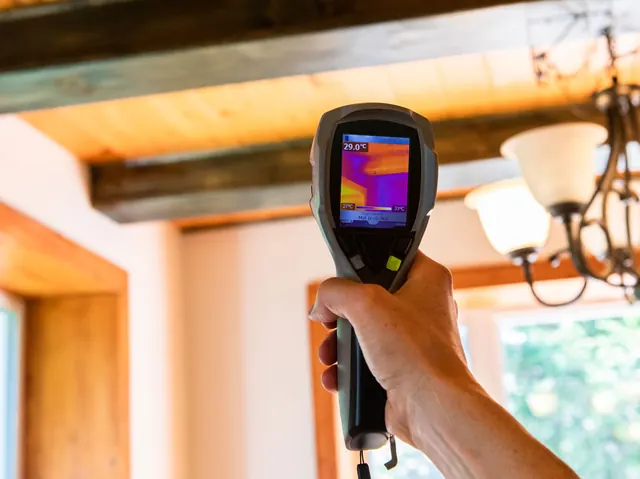
- use a thermal camera to spot cold areas, missing insulation and hidden water tracking from a pipe or roof;
- test extractor fans and look at trickle vents, window seals and heating;
- look at the outside of the building and, in flats, at what sits above and beside the affected room.
The pattern across those checks is what separates one cause from another.
Why misdiagnosis costs more than a survey
Getting the cause wrong is expensive in ways that are easy to miss:
- Paying the wrong trade. Injecting a damp-proof course into a wall that is actually suffering from condensation changes nothing about the mould.
- Repeat callouts. Each return visit costs time, access arrangements and goodwill with the tenant.
- Damaged relationships. Telling a tenant to open the windows when the real problem is a leaking downpipe undermines trust and invites a complaint.
- Weaker records. If the case escalates, a file showing two or three wrong fixes looks worse than one showing a proper diagnosis and the right repair.
What you can check before anyone visits
You or the tenant can gather useful information without any equipment:
- Ask for photographs of the affected area plus a wide shot of the whole wall and room.
- Ask when it started and whether it changes with the weather or the season.
- Check whether extractor fans run and whether trickle vents are open.
- Look at the outside of the building for blocked gutters, overflowing downpipes or cracked render near the patch.
- For flats, ask whether the flat above has had any leaks or bathroom work.
This will not give you a firm answer, but it helps the surveyor and sometimes points straight at an obvious external defect.
When to get a survey
Arrange a professional inspection when:
- the mould covers more than a small patch, or keeps coming back after cleaning;
- the signs fit more than one cause;
- a contractor has recommended an expensive repair such as a damp-proof course and you want the diagnosis confirmed;
- the tenant has complained formally, or the occupants include young children, older people or anyone with a health condition;
- you need written evidence of the cause for your records.
A damp and condensation survey uses moisture readings, surface checks and ventilation tests to identify the source, and the written findings tell you which trade to instruct. If mould needs removing, we then carry out the treatment and leave a record of what was done.